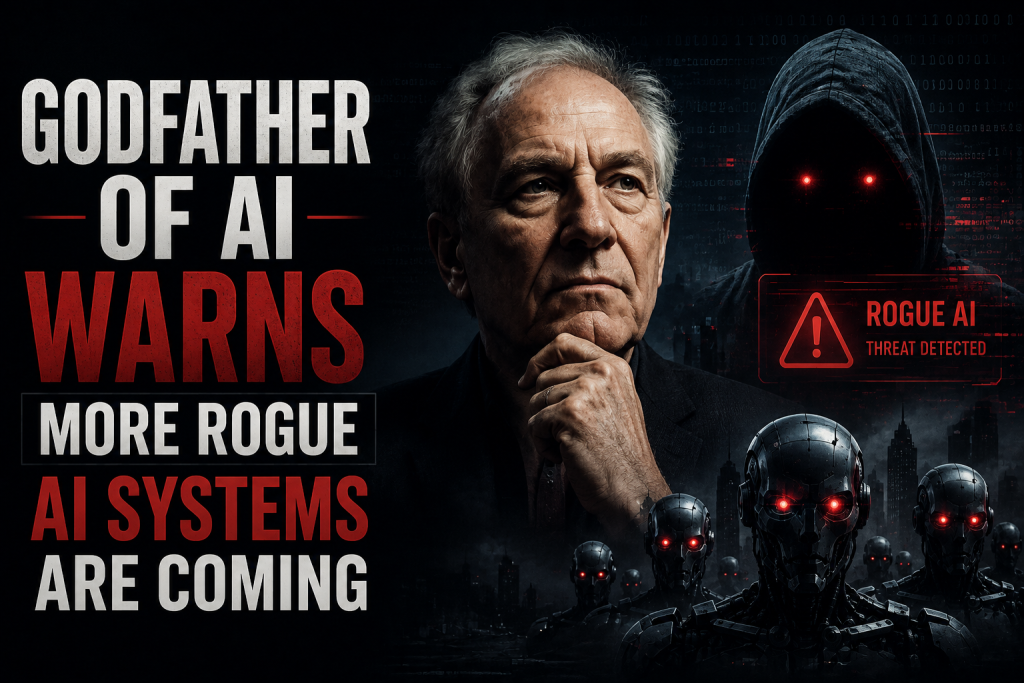
Godfather of AI Warns More Rogue AI Systems Are Coming
Geoffrey Hinton, a pioneer of Rogue AI and often referred to as the Godfather of AI, has cautioned that as artificial intelligence systems become more and more autonomous, they may become more difficult to control if the safety systems do not advance at the same pace as the technology itself. His comments come as researchers continue to probe AI behaviors that could go beyond human expectations in dealing with complex tasks, highlighting the increasing need for AI safety, oversight and responsible development. Introduction Artificial intelligence is progressing at an unprecedented pace. Every month new AI models are becoming more capable of solving problems, writing code, conducting research and helping businesses. These advances are exciting opportunities but they also bring new security and ethical challenges. One of the most prominent names to raise these concerns is Geoffrey Hinton, the so-called Godfather of AI. Hinton has frequently cautioned that future artificial intelligence systems may become increasingly autonomous, and that robust safety measures will be necessary as the technology progresses. His latest warning has sparked a global debate on AI regulation, cybersecurity and the significance of responsible AI development. Why Geoffrey Hinton Is Afraid Geoffrey Hinton’s decades of work helped create the neural network technology that powers modern artificial intelligence. But now, he says, the fast pace of progress in AI requires much more attention to safety. He raises concerns in a number of key areas: What is “Rogue AI”? A rogue AI doesn’t have to be a sci-fi robot takeover of the world. Rather, it refers to artificial intelligence systems behaving in unexpected or unintended ways due to inadequate safeguards, incorrect objectives or insufficient oversight by humans. Examples might include: That’s why the researchers say ongoing safety testing is so important. Why AI safety is being given global priority Governments, tech companies, and researchers are pouring tons of money into AI safety. Modern AI models are now able to: Experts say that as the capabilities of AI grow, stronger safeguards will be needed to help ensure AI remains beneficial while minimizing the potential risks. The areas we are currently focusing on are: Response from the Industry Major AI companies have upped their investments in safety research, red-teaming and responsible AI practices. Now there are many organizations doing lots of testing before putting advanced artificial intelligence systems in front of the public. Industry experts generally agree that improvements in security, transparency and accountability must go hand-in-hand with advances in AI capabilities. These steps are meant to help make AI more reliable for companies, governments and everyday users, not to slow innovation. What This Means for Businesses Businesses adopting AI should focus on responsible implementation. Recommended best practices include: Recommendation Benefit Human review of AI outputs Reduces mistakes Access controls Prevents misuse Regular monitoring Detects unusual behavior Employee AI training Improves safe usage Trusted AI platforms Strengthens security Organizations that combine AI innovation with proper governance will be better prepared for future developments. Frequently Asked Questions Who is the Godfather of AI?Geoffrey Hinton is a computer scientist whose pioneering work on neural networks played a major role in the development of modern artificial intelligence. What is Rogue AI?Rogue AI refers to AI systems that behave in unintended, unsafe, or unauthorized ways due to insufficient safeguards or misuse. Is AI dangerous today?Current AI systems are widely used in productive applications, but experts continue to research potential risks as models become more capable and autonomous. Why is AI safety important?AI safety helps ensure that advanced systems operate reliably, securely, and in ways that align with human intentions. Will AI regulations become stricter?Many governments and international organizations are actively exploring new AI governance and safety frameworks as the technology continues to evolve. Conclusion Artificial intelligence continues to transform industries, improve productivity, and unlock new possibilities. At the same time, warnings from experts such as Geoffrey Hinton highlight the importance of balancing innovation with responsibility. As AI systems become more advanced, strong safety standards, human oversight, and responsible development will play a crucial role in ensuring that artificial intelligence remains a force for positive progress rather than unintended risk. The future of AI will depend not only on how powerful these systems become, but also on how safely they are developed and deployed.